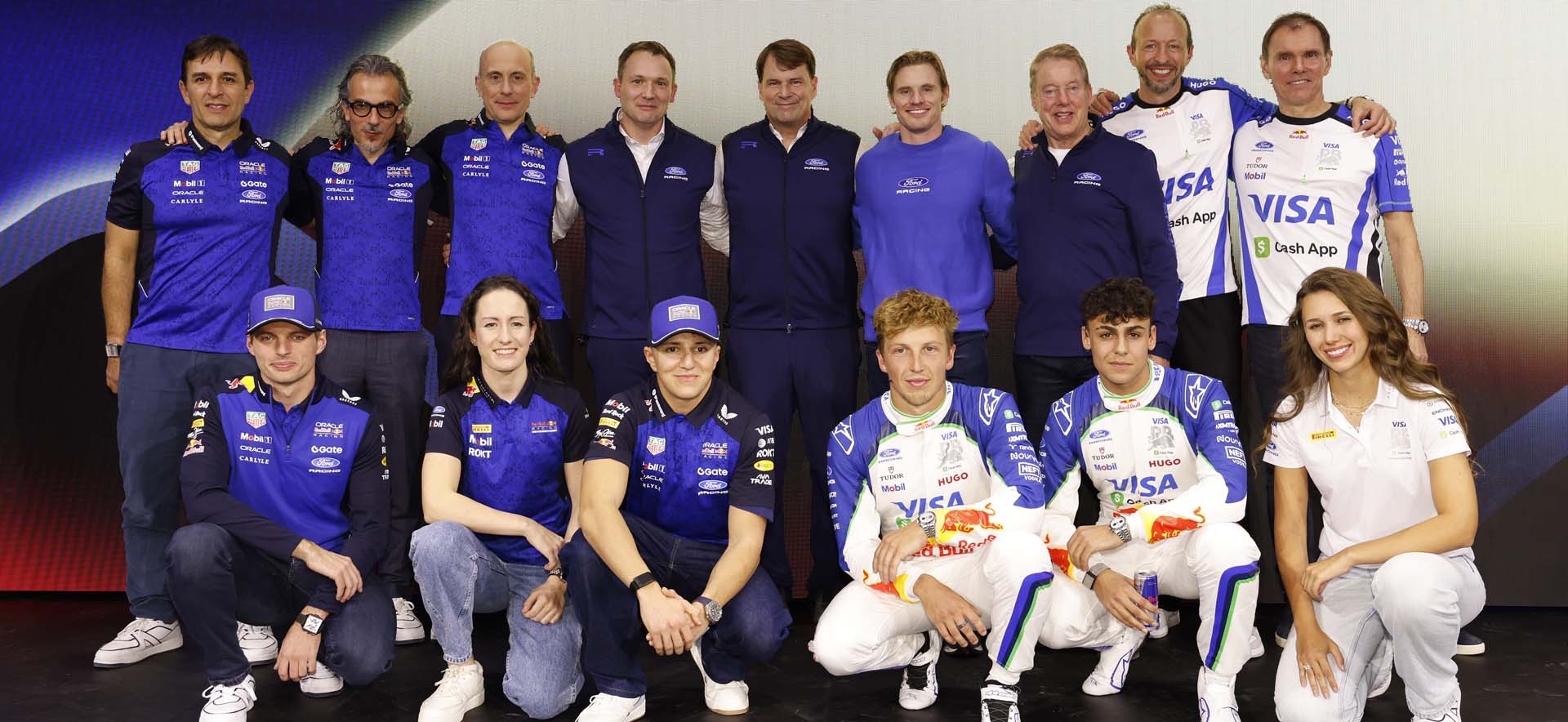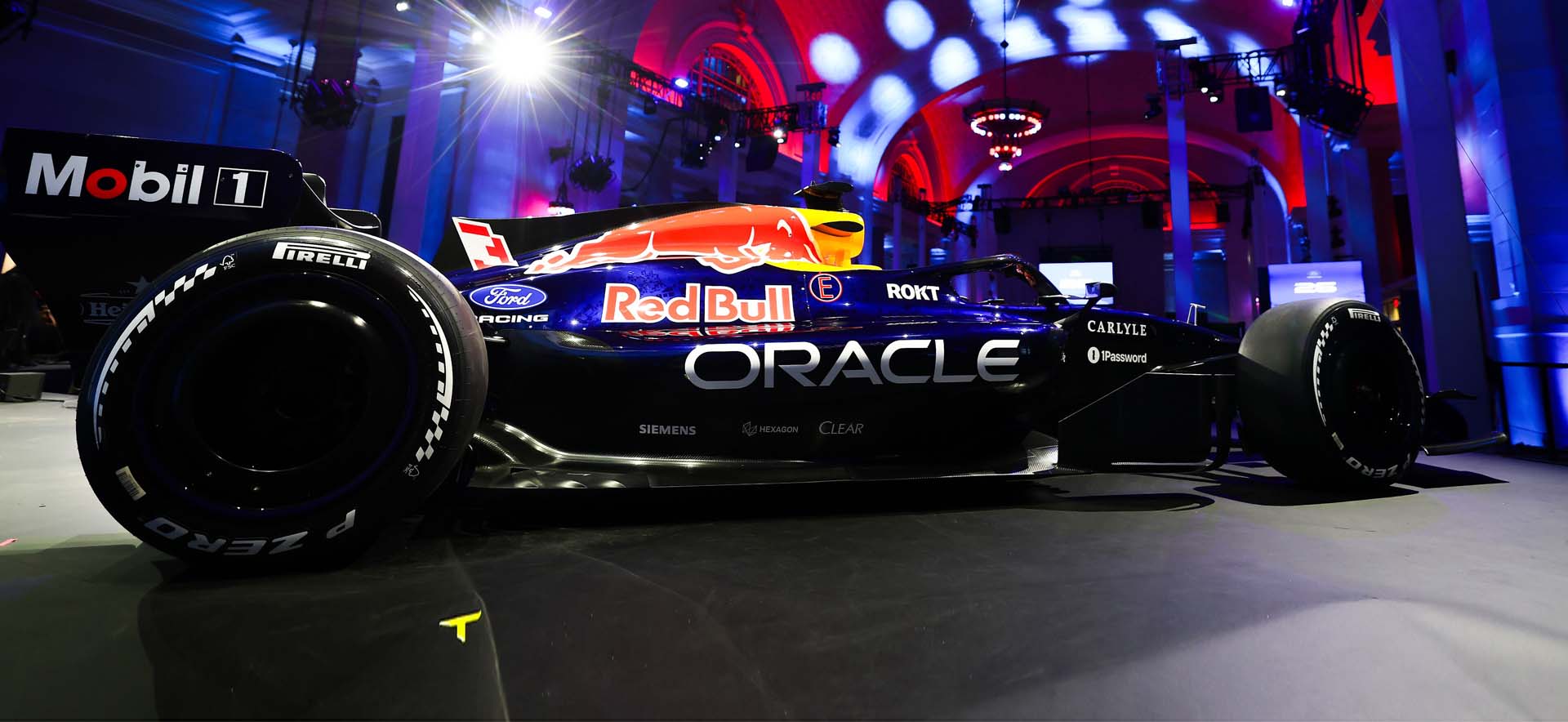

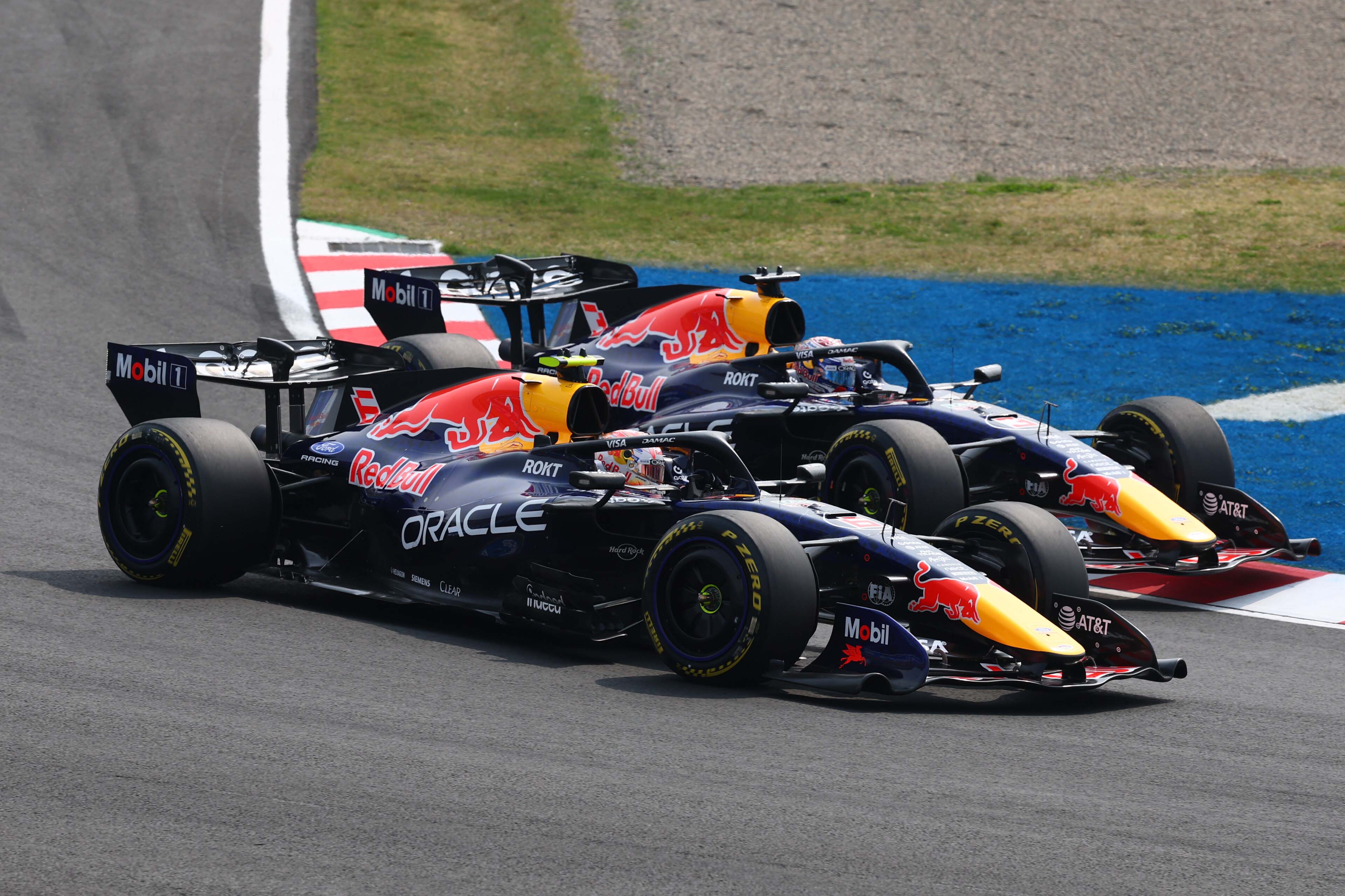
After 22 years away from Formula One we are back where we belong at the pinnacle of motorsport as part of a new Red Bull Ford Powertrains partnership.
Three years ago we joined forces with Red Bull Powertrains to assist with development of the Oracle Red Bull Racing and Visa Cash App Racing Bulls Formula One teams’ hybrid power units for the 2026 Formula One season and beyond.
We were under no illusions about the scale of the challenge ahead. We were fighting a two-decade experience gap against established manufacturers.
Why were we so confident? We knew what we were bringing to the Red Bull Ford Powertrains table: More than 120 years' experience of innovation in powertrain development and some of the most talented engineers in the world.
Among them is Kevin Ruybal — motorsports powertrain controls and simulation specialist — who has been at the heart of our whirlwind journey to develop a powertrain we can be proud to put the Ford name to.
We spoke to Kevin to learn more about his innovations and role within Red Bull Ford Powertrains.
“We needed a way to simulate the powertrain before the powertrain actually existed.” Kevin Ruybal, Red Bull Ford Powertrains
Your xROM software has been credited with playing a big role in the development of the new Red Bull Ford Powertrains power units. What is it and what does it do?
XROM stands for Experimental Reduced Order Model, and it's a software program I developed that simulates engines.
It takes very complicated engine models and reduces them down to the minimum amount of physics that we need for accuracy. That makes it much easier to set parameters for measurement, and it means the program can run really fast.
How fast?
The Red Bull Ford Powertrains engine performance team uses the Oracle Cloud High Performance Compute Cluster to run incredibly detailed 3D simulations of turbocharger and engine combustion performance.
These models are essential — they provide the high-fidelity insight needed to predict current and future engine behaviour — but, despite Oracle’s massive computing power, they remain inherently time-consuming.
What makes xROM powerful is that it captures the behaviour of these complex, predictive models in a much lighter form. While it doesn’t predict engine performance on its own, it can replicate the results of the high-fidelity simulations with remarkable accuracy.
When we first started using xROM within our Red Bull Ford Powertrains projects, it could simulate a lap around 10,000 times faster than real time, because the model was very simple and focused on a limited number of behaviours.
But as the team began to realise how accurate xROM is, they started asking: “Hey, can you add in this actuator so we can play around with what that would do?” Or: “We noticed this behaviour on the dyno. Can you find a way to recreate the same thing?”
Today, xROM runs at around 1,000 times faster than real time. That means if we want to simulate a one-minute lap, instead of taking 10 or 15 minutes, it takes less than a second — making it ideal for driver-in-the-loop simulators and rapid experimental testing.
That’s incredible. How has it benefited the development process?
Obviously it helps us to work through new iterations of the power units really quickly.
When the drivers test different set-ups in the simulator they can feel exactly how the power unit will respond to different scenarios. And now we can digitally create those different responses for a full lap in seconds.
But it also helps the controls, calibration and simulation team that I’m part of ensure the virtual version of the engine is up to date with what we're learning from the real hardware during track testing.
It’s really satisfying when we get data back from track tests and it matches our simulations perfectly — like you can't even tell the difference between the two.
Where did the idea for xROM come from?
Ford has been simulating engines and hybrid systems for decades. My job was really to take what I had learned in previous roles at Ford — and tools I had already developed — and extend that for Red Bull Ford Powertrains.
Basically, we needed a way to simulate the powertrain before the powertrain actually existed.
Initially, I was just asked to create a simulation to capture the effects of turbocharger response. That could have been a very simple model of just the turbocharger and how it would respond to different inputs.
But when I started looking at all the different interactions the turbocharger had with everything else that’s happening with the power unit I thought: "This is probably going to require an actual power unit model."
So, I figured if we create a whole simulation, we'll get a very accurate power unit model, and we'll get the information we want about the turbo response for free.
Once the Oracle Red Bull Racing team started asking for more and more content to be added, it really took off, and now xROM has basically turned into my full-time job.
My dream was always to work for Ford. It's the reason I'm an engineer.” Kevin Ruybal, Red Bull Ford Powertrains
Was it an unusually fast development process?
Yes, it all came about very quickly, but the advantage was I didn't need to start completely from scratch.
It was based on work I had done before for Ford's production vehicle hybrid powertrains.
Did you always want to work in Formula One?
My dream was always to work for Ford. I wanted to design Mustangs. It's the reason I'm an engineer.
I joined in 2015 and worked on powertrain control systems for lots of production models before moving to motorsports.
Since then, I've done all sorts of fun stuff with Mustang GT3 and GT4; the Mustang Cobra Jet 1800 electric drag racer; the Mustang Mach-E 1400 — which I guess are the coolest Mustangs anyway.
Jay Ward is director of global Ford Racing motorsport communications