
Loose brains and lighting didn’t make this beast
In 2006, a group of Ford Racing engineers came up with a wild idea...
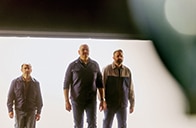
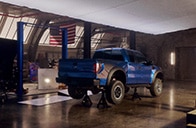
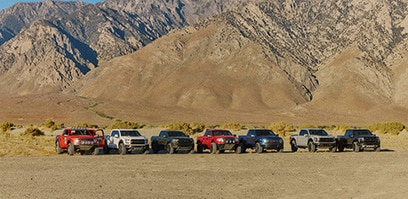
Turn the demon they raced in Baja and make it available for everyone. They were going to use same engine, shocks, chassis and even cup holders and make it all street legal. Skeptics though they were crazy and said nothing this big should go that fast. Not even cancelling the project six times could stop their obsession. Meet the mad scientists who never stopped testing and perfecting the Raptor.
The Masterminds
Derek Bier
Chief Engineer, Ford Racing
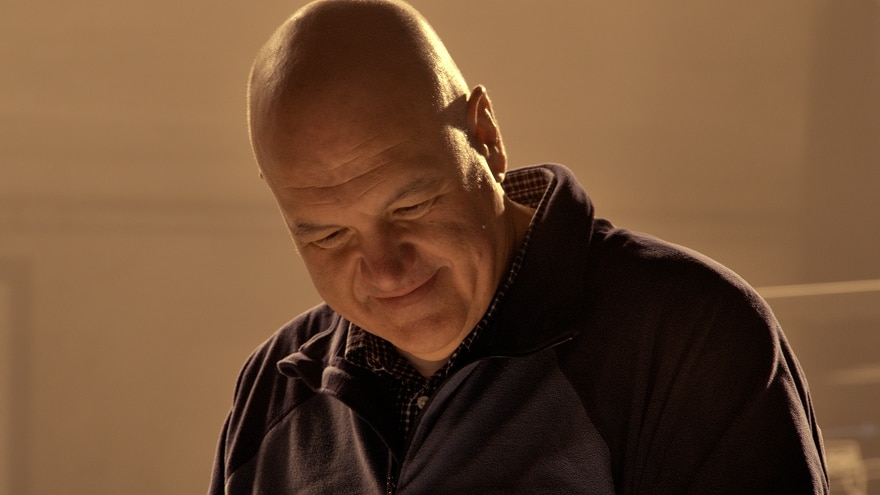
Derek Bier’s path to engineering started in his father’s garage. As the son of an automechanic, he grew up with a project always going on. He didn’t know where that would lead, but his parents were set on him becoming the first in the family to go to college which led him to pursue engineering at Georgia Tech.
Today, Derek is a 29-year Ford veteran with more than 11 years at Ford Racing. He leads the team responsible for vehicle development and attributes across Ford Racing’s production and competition vehicles, the architecture of those vehicles, and the cycle plan and strategy for the entire portfolio. He’s quick to point out that the portfolio is like no other: Ford races in 40 series around the world, builds production cars that set records at the Nürburgring and trucks that run Baja, and carries a 125-year racing history.
For Derek, putting racing and production under one roof makes both better. Competition shows the team how far a product can be pushed, and production brings discipline and the full expertise of the broader company. That exchange shapes where he sees Ford Racing going next: building on Raptor’s success to help Ford own the off-road, expanding the Raptor name into new segments, and bringing racing-proven technology to Ford’s global lineup.
Ask him what people get wrong about engineering, and he’ll tell you it isn’t all math and physics. It’s a team working together to solve a problem. With more than 5,000 parts coming together to produce a new vehicle every minute, he calls building a car “the ultimate team sport.”
His favorite moment proves the point. While driving an early 2012 Boss 302, a car he played a major role in engineering, he stopped for gas. A father and son walked up to tell him it was a great car. He’d said “thanks” to that compliment countless times before. This time, he realized, he’d actually earned it.
Tim Smith
Vehicle Architecture and CAE Manager, Ford Racing
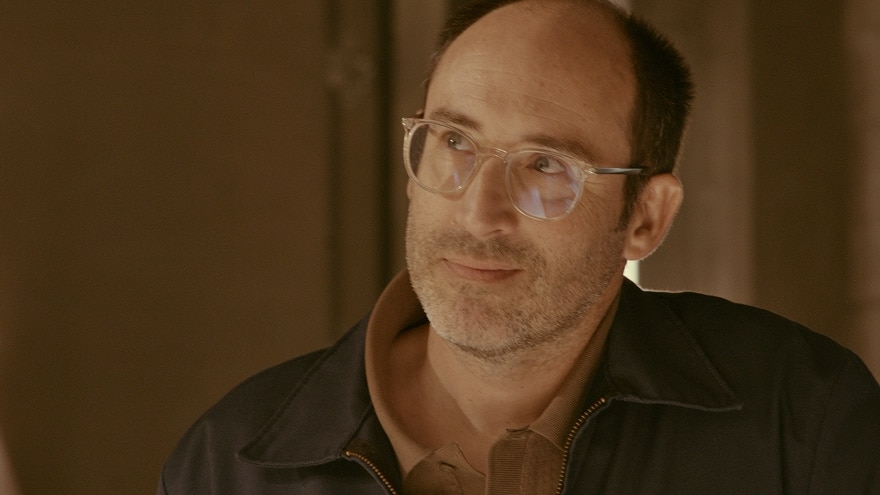
Long before he helped create the original Raptor, Tim was a kid exploring 20 acres of barns, woods and trails in rural northeast Ohio. His grandfather sparked his love of machines early, putting him on a riding mower and snowmobile at just age four. With motorcycles, go-karts, tractors and old cars all around, not much supervision, and Lake Erie winters to contend with, there was always something to ride, fix or figure out. His dad’s excavating company added blueprints, bulldozers and a first look at how big systems fit together.
Engineering was the obvious path, but the auto industry didn’t occur to him right away. That changed when his dad took up club racing during his college years. When graduation neared and nothing else sounded interesting, he moved to Michigan for a master’s degree from Kettering University, and in late 1998 he found his way to Ford through a contract job in Vehicle Architecture.
In 2003 he joined SVT, where he spent 13 years working on the GT500, KR, GT350, Focus ST and RS, and the original Raptor. That last one remains his favorite program. The team was small and off nearly everyone’s radar, which gave them rare freedom to make decisions without so many eyes looking over their shoulders.
A little over two years ago, he returned to Ford Racing and to Vehicle Architecture, the discipline where his Ford career began. He’s especially excited about bringing production and motorsports together. The constraints differ, but the goal of being the best is the same, and so are the physics.
What sets this work apart, he believes, is passion. Nobody needs what Ford Racing builds.
Customers want it, and the team wants it just as badly. The biggest surprise of his career? How much engineering depends on relationships and soft skills, not just technical coursework.
Chris Paiva
Vehicle Dynamics Manager, Ford Racing
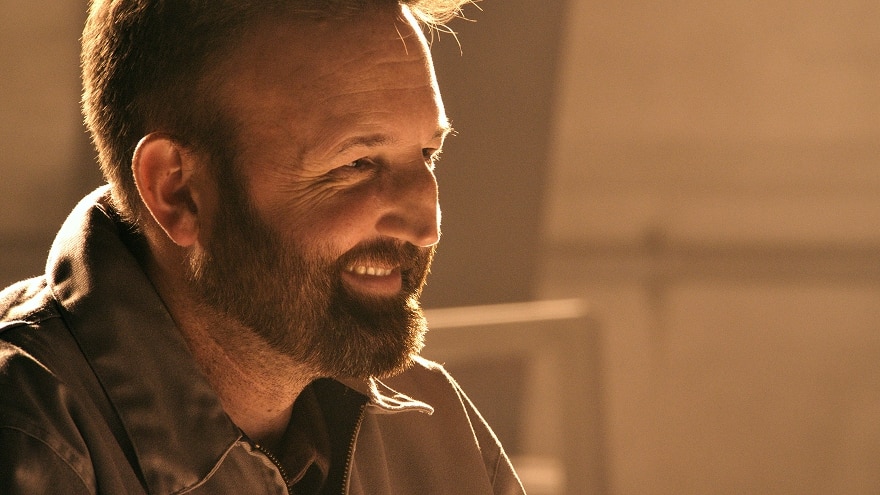
Chris has a self-proclaimed “off-road problem”. Anyone who has met him at the races knows it’s true. To many of them, he’s simply known as “the Raptor Guy.”
Chris is a third-generation Ford engineer. His father and grandfather each retired after more than 30 years with the company, so he was practically born into it. He grew up around cars, working on them with his dad in the garage, and a career in the auto industry was never really in doubt. Neither was Ford. His walls were covered in Mustangs as a kid, and by high school the SVT Cobra, Lightning and SVT Focus had taken over, making a job at SVT a lifelong dream.
That dream came true. Over 20 years at Ford, Chris has spent more than 15 at SVT, Ford Performance and now Ford Racing. He has led the Raptor on- and off-road development team since the start of the second-generation truck. His favorite moment came after more than three years leading development of the Bronco Raptor: the big reveal in Johnson Valley, on the same trails where he has raced King of the Hammers. Watching people see what the truck could do was a full-circle moment for him.
Chris believes he was never the smartest person in school. What sets him apart is a lifetime of hands-on experience with how vehicle systems work together, and knowing when to bring in the experts. Passion matters just as much. He eats, sleeps and bleeds performance vehicles, and he wants every truck to be authentic and worthy of the Blue Oval. He sees that same passion across Ford Racing, a team of enthusiasts who design, build and race their own vehicles.
The biggest surprise in his career has been how collaborative engineering is. A cohesive team can matter more than having the smartest people in the room, because a team that can’t work together will never get the product across the finish line. He also wishes more people understood how complex modern vehicles are. Today’s cars have more than 100 computer modules, complex software and hundreds of parts working together just to back out of the driveway.
For Chris, competing on the world stage brings out the best in everyone, and it should be a pride point for all of Ford. Whether he’s trail riding with friends and family or racing King of the Hammers, if it’s in the dirt, Chris is in.
“I spent so much time in Baja i learned to speak Spanish”
Behind the Scenes Gallery